Co-Adaptive & Evolutionary AI
Evolutionary and coevolutionary methods for optimizing interacting learning systems, including multi-objective, distributed and adaptive learning.
Building adaptive AI systems that learn, evolve, and collaborate.
University of Málaga — Tenured Professor
MIT Computer Science and Artificial Intelligence Laboratory (CSAIL) — Research collaboration
My research lies at the intersection of evolutionary computation and machine learning. I investigate how intelligent systems can adapt, compete, cooperate and co-evolve, and how those mechanisms can support efficient, trustworthy and societally useful AI.
Opportunity creates responsibility.
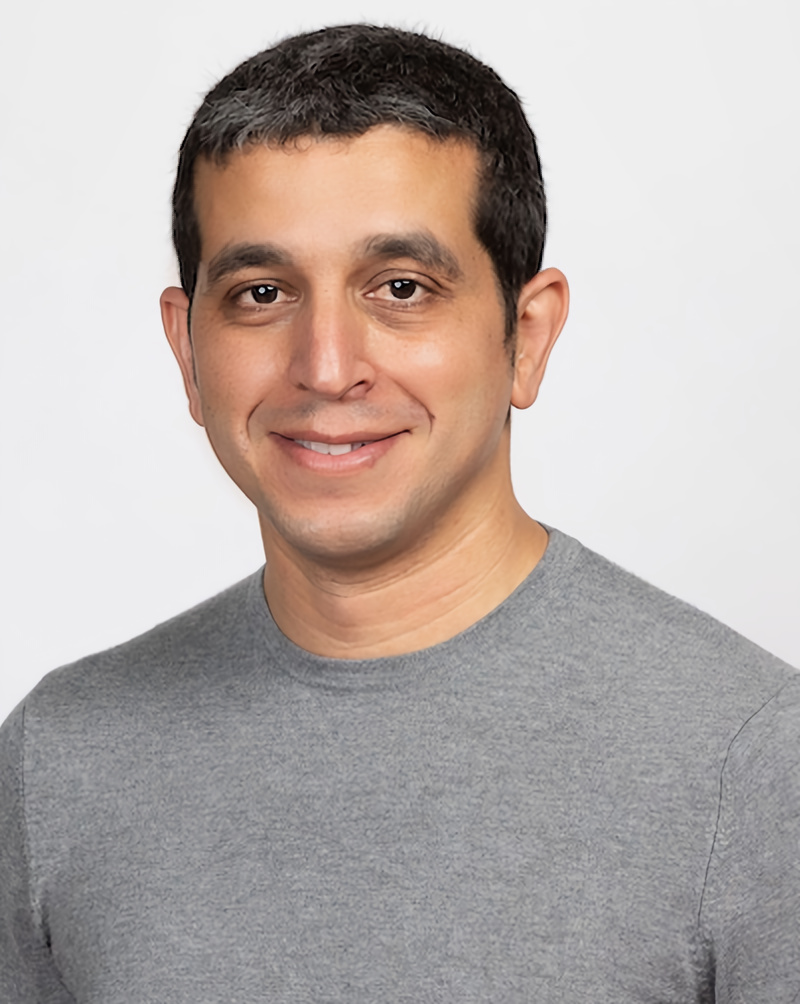
“I see academic success not merely as something to accumulate, but as something to circulate.”
I have benefited from education, international collaboration, and people and institutions that opened doors throughout my career. I therefore see academic opportunity as carrying a responsibility: to create knowledge, to make it useful, to open opportunities for others, and to return part of what academia has given me to the communities that make it possible.
A central question guides much of my current work: what happens when AI systems do not learn in isolation, but learn through interaction with other intelligent systems?
Evolutionary and coevolutionary methods for optimizing interacting learning systems, including multi-objective, distributed and adaptive learning.
Generative models and interacting AI agents capable of learning through competition, cooperation, feedback and structured adaptation.
Federated, privacy-preserving and resource-aware learning for environments in which data, computation and decision-making are distributed.
Machine learning and optimization for sustainable cities, mobility, environmental monitoring, climate intelligence and resilient infrastructure.
How multiple machine-learning models can jointly evolve and adapt, from coevolutionary generative models to semi-supervised, federated and agentic systems.
AI methods that connect environmental observations, machine learning and optimization to improve our understanding of atmospheric and climate-related phenomena.
Machine learning and evolutionary optimization for urban mobility, transportation, resource management, infrastructure and environmental monitoring.
The same principle that shapes my research also shapes how I think about academic life: knowledge becomes more valuable when it moves—between researchers, students, institutions, industry and society.
Creating opportunities for students and early-career researchers to grow through ambitious, supported research.
Contributing leadership, reviewing, organization and service to the communities that make research possible.
Helping useful ideas move from academic research toward practical technologies and real-world applications.
Making AI and scientific knowledge accessible beyond academia through outreach, talks, media and public dialogue.
Teaching and mentoring are integral parts of my academic work. I teach across artificial intelligence, machine learning, deep learning, cloud computing and computer science, and supervise research ranging from generative AI and federated learning to climate intelligence and sustainable cities.
Since 2016, I have worked as an external consultant on international development-cooperation projects funded by the World Bank, the Inter-American Development Bank (IDB/BID), and AECID. Through initiatives including SIASAR and SANIHUB, I have contributed to information systems, data-analysis models, indicators, service monitoring and planning-support tools. My broader public-interest work also includes collaboration with NGOs such as the Red Cross and Engineers Without Borders.
I am interested in research collaborations, doctoral supervision, visiting opportunities, invited talks, academic initiatives, technology transfer and responsible applications of AI.